Ads 468x60px

ShareThis

Related Posts Plugin for WordPress, Blogger...

About Me

My Photo
Marketing leader & Wharton MBA with expertise in marketing strategy, product development & innovation

Sample text

ddddddddd
Showing posts with label product management. Show all posts

Using segmentation to develop your marketing strategy

While there are many ways to harness the power of segmentation, one of the broadest and most valuable applications is for designing your marketing strategy – a strategy that clearly defines who you’re targeting, what you’re going to offer them, where you’re going to reach them, and how you’re going to sell them on your product & brand.

The key “superpower” of segmentation is that it enables you to take a population of consumers and group them based upon similarities they share with respect to the very attributes that you use to define your marketing strategy (i.e., who to target, what to offer them, etc.). What this means is that the segments you derive from the segmentation process will have their preferred marketing mixes already “baked into them”. Powerful stuff.


Segmentation for designing marketing strategies is a 2-step jig


Step 1: Identify “the who”

In the first step you identify “the who”. Who are those consumers in the population who have expressed interest in your product category or who have needs addressed by your product category? In this step you’re simply separating out those interested consumers from the rest of the general population.


Step 2: Identify your target segments
The second step is where things really get cooking. In step 2 you take the population of interested consumers and group them based upon their similarities with respect to “the what, why, where & how” of your product category.

In this step your goal is to identify the most attractive segments for your business to target – segments for which the following are true:
  • One or more of your products meet the segment’s functional & emotional needs
  • Your existing channels for selling, servicing & awareness-building align with the segment’s channel preferences and media-consumption habits
  • Your product & brand positioning align with the segment’s “reasons for buying” from both a functional and emotional perspective
  • You can identify the segment in a cost-effective manner
  • The segment is large enough in size and profit-potential to merit investment in a distinct marketing mix
By the end of step 2, you will have identified one or more segments that:
  • Are interested in one of more of your products
  • Are most effectively targeted using a distinct marketing mix
  • AND, are large enough to merit your investment in this distinct marketing mix

These segments will become your target segments and along with their distinct marketing mixes represent your marketing strategy. To reiterate from the intro, the beauty of this approach is that by basing part of your segmentation on similarities shared by consumers across key components of your marketing mix, the segments you derive come with their “marketing instructions” already included.


What about segments you choose not to target?
So what about segments that don’t meet enough of your targeting criteria? What should you do about them? The answer is that it depends.

For those segments large enough in size & profit potential you may consider developing new products, building out new channels, or creating communication strategies that better meet their needs and more effectively “speak to them”.

On the other hand, for those segments that are very small or that would require major retooling of your operations, extensive employee training, or significant stretching of your brand, you would likely leave to other companies to pursue.


More posts on segmentation & marketing strategy:


Great books & articles on segmentation:


read more
Using segmentation to develop your marketing strategy

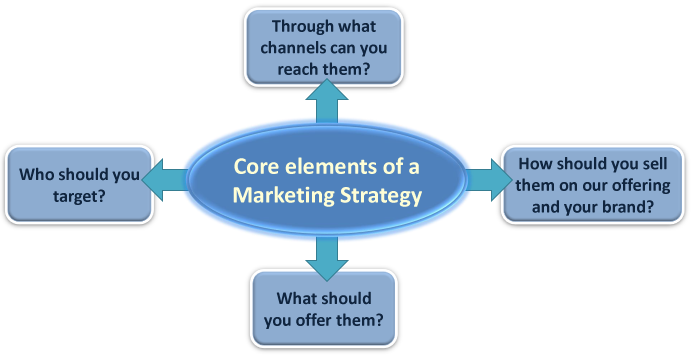
While there are many ways to harness the power of segmentation, one of the broadest and most valuable applications is for designing your marketing strategy – a strategy that clearly defines who you’re targeting, what you’re going to offer them, where you’re going to reach them, and how you’re going to sell them on your product & brand.

The key “superpower” of segmentation is that it enables you to take a population of consumers and group them based upon similarities they share with respect to the very attributes that you use to define your marketing strategy (i.e., who to target, what to offer them, etc.). What this means is that the segments you derive from the segmentation process will have their preferred marketing mixes already “baked into them”. Powerful stuff.


Segmentation for designing marketing strategies is a 2-step jig


Step 1: Identify “the who”

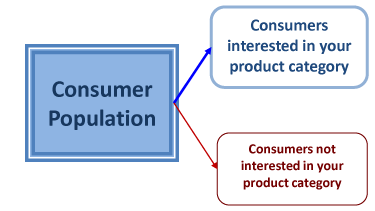
In the first step you identify “the who”. Who are those consumers in the population who have expressed interest in your product category or who have needs addressed by your product category? In this step you’re simply separating out those interested consumers from the rest of the general population.

Step 2: Identify your target segments
The second step is where things really get cooking. In step 2 you take the population of interested consumers and group them based upon their similarities with respect to “the what, why, where & how” of your product category.

In this step your goal is to identify the most attractive segments for your business to target – segments for which the following are true:
  • One or more of your products meet the segment’s functional & emotional needs
  • Your existing channels for selling, servicing & awareness-building align with the segment’s channel preferences and media-consumption habits
  • Your product & brand positioning align with the segment’s “reasons for buying” from both a functional and emotional perspective
  • You can identify the segment in a cost-effective manner
  • The segment is large enough in size and profit-potential to merit investment in a distinct marketing mix
By the end of step 2, you will have identified one or more segments that:
  • Are interested in one of more of your products
  • Are most effectively targeted using a distinct marketing mix
  • AND, are large enough to merit your investment in this distinct marketing mix
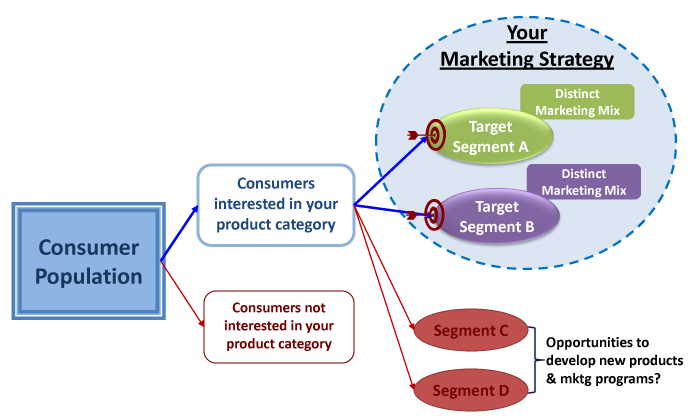
These segments will become your target segments and along with their distinct marketing mixes represent your marketing strategy. To reiterate from the intro, the beauty of this approach is that by basing part of your segmentation on similarities shared by consumers across key components of your marketing mix, the segments you derive come with their “marketing instructions” already included.


What about segments you choose not to target?
So what about segments that don’t meet enough of your targeting criteria? What should you do about them? The answer is that it depends.

For those segments large enough in size & profit potential you may consider developing new products, building out new channels, or creating communication strategies that better meet their needs and more effectively “speak to them”.

On the other hand, for those segments that are very small or that would require major retooling of your operations, extensive employee training, or significant stretching of your brand, you would likely leave to other companies to pursue.


More posts on segmentation & marketing strategy:


Great books & articles on segmentation:

read more

Your product's lemming factor: are you following your competitors off a cliff?

I have seen it happen time & time again... and it always reminds me of the psychology of crowds, and how the individuals within the crowds assume their fellow crowd-members know something they don't know. So the individual continues to follow the crowd, all the while not realizing that the crowd is often an amalgam of equally confused individuals...

The Lemming Effect
Ok, enough of the philo-babble. The "lemming effect" as I call it is no doubt present within many organizations, and all of us at one time or another fall into its trap. Its influence within product management & product development is pervasive, frequently resulting in products that get bulkier & costlier over time. But we would be remiss to equate the proliferation of bells, whistles & "performance enhancers" with greater levels of customer value.

There are many drivers of the phenomenon of "Frankensteining" a product, and the lemming effect is at the top of the list. It all starts when we become more focused on our competitors than on our customers. One day Acme, our arch rival, increases the performance of its product or adds a new feature. "Hmmm", we think to ourselves, "What does Acme know that we don't? Are customers demanding greater levels of performance?" And then, voila, with limited thought or analysis we quickly 'upgrade' our product. Acme no doubts catches wind of our "2.0", and the arms race ensues.

All the while, our customers might not even be looking for the increased performance or the new bell or whistle. Perhaps our target customer looks a little different from Acme's target customer, and have somewhat differing needs. Perhaps Acme's reason for making enhancements to its product were ill-conceived or driven by internal factors that are invisible to us. Regardless of the reason, the one thing we have successfully achieved is increasing the cost of both our product as well as Acme's, who will no doubt follow suite with their "3.0". Whether we're able to "pass along" this incremental cost to our customers in the form of higher prices is something we certainly hope we can do.

Never take your eyes off your customers
The moral of the above faux situation, and of the lemming effect in general is to be wary of the moves that your competitors make. Do not assume the moves they are making are the right ones or that they have generated an insight that has given them the secret to building the perfect service for customers. The remedy to the lemming effect is quite straightforward, yet often ignored. Stay abreast of what your competitors are doing, but keep your eye on the ball - aka, your customers! Stay close to your customers. Develop multiple channels & methods for gaining access to the "voices of your customers". Understand their needs, desires, motivations, decision-making processes, changes in their outlooks or needs, etc. If you do these things right, you will be far less vulnerable to the lemming instinct, and far more confident in product decisions that you choose to make.
read more

Your product's lemming factor: are you following your competitors off a cliff?

I have seen it happen time & time again... and it always reminds me of the psychology of crowds, and how the individuals within the crowds assume their fellow crowd-members know something they don't know. So the individual continues to follow the crowd, all the while not realizing that the crowd is often an amalgam of equally confused individuals...

The Lemming Effect
Ok, enough of the philo-babble. The "lemming effect" as I call it is no doubt present within many organizations, and all of us at one time or another fall into its trap. Its influence within product management & product development is pervasive, frequently resulting in products that get bulkier & costlier over time. But we would be remiss to equate the proliferation of bells, whistles & "performance enhancers" with greater levels of customer value.

There are many drivers of the phenomenon of "Frankensteining" a product, and the lemming effect is at the top of the list. It all starts when we become more focused on our competitors than on our customers. One day Acme, our arch rival, increases the performance of its product or adds a new feature. "Hmmm", we think to ourselves, "What does Acme know that we don't? Are customers demanding greater levels of performance?" And then, voila, with limited thought or analysis we quickly 'upgrade' our product. Acme no doubts catches wind of our "2.0", and the arms race ensues.

All the while, our customers might not even be looking for the increased performance or the new bell or whistle. Perhaps our target customer looks a little different from Acme's target customer, and have somewhat differing needs. Perhaps Acme's reason for making enhancements to its product were ill-conceived or driven by internal factors that are invisible to us. Regardless of the reason, the one thing we have successfully achieved is increasing the cost of both our product as well as Acme's, who will no doubt follow suite with their "3.0". Whether we're able to "pass along" this incremental cost to our customers in the form of higher prices is something we certainly hope we can do.

Never take your eyes off your customers
The moral of the above faux situation, and of the lemming effect in general is to be wary of the moves that your competitors make. Do not assume the moves they are making are the right ones or that they have generated an insight that has given them the secret to building the perfect service for customers. The remedy to the lemming effect is quite straightforward, yet often ignored. Stay abreast of what your competitors are doing, but keep your eye on the ball - aka, your customers! Stay close to your customers. Develop multiple channels & methods for gaining access to the "voices of your customers". Understand their needs, desires, motivations, decision-making processes, changes in their outlooks or needs, etc. If you do these things right, you will be far less vulnerable to the lemming instinct, and far more confident in product decisions that you choose to make.
read more